
In her new book, Libertine London, Julie Peakman investigates the sex lives of women from 1680 to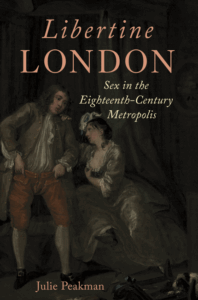 1830, the period known as the long eighteenth century. She explores those women who came to be associated with sex outside of marriage and were verbally abused for indulging in sex for love, desire or a living, behaviour that men might display with no social diminution. In doing so, she uncovers the various experiences of women, whether mistresses, adulteresses or those involved in the sex trade. From renowned courtesans to downtrodden streetwalkers, she examines the multifaceted lives of these women within brothels, on stage and even behind bars.
Based on new research into court transcripts, asylum records, magazines, pamphlets, satires, songs, theatre plays and erotica, we learn of the gruesome treatment of women who were sexually active outside of marriage. She looks at sex from women’s points of view, undercutting the traditional image of the bawdy eighteenth century to expose a more sordid side, of women left distressed, ostracized and vilified for their sexual behaviour.
The libertine world was to include women, but libertine women differed greatly from their male counterparts in that they only had their bodies to negotiate with and held a lesser place in society. Their sexual freedom was also often connected less to sexual desire, and more to the sexual encounters they needed for their survival. Libertine women did not always receive pleasure from their experience; just as often, they were simply making a living. Others might wallow in sexual pleasure, follow their heart’s desire and give themselves to men they loved. However, they were often still dependent on men and ‘kept women’ lost any freedom they might have had. Libertine women were free sexually from moral conventional codes, but their libertinism came at a price.
We can see a vast gap opening up when the term ‘libertine’ was applied to men and to women. Whereas libertine men were considered genial rakes, libertine women were seen as immoral; while sexual laxity in men was often a proof of manhood and virility, it was condemned in women. Indeed, women who were sexually incontinent were labelled in derogatory terms, as whores, harlots and strumpets. Women working in the sex industry were often seen as libertines, but would not necessarily have had the freedom of choice men had, and sex might well have made them miserable. ‘Libertine’ is therefore an imprecise and ambiguous word.
It is this overriding double standard which made women’s lives a misery. Men were to blame – male authors, doctors, legal representatives, judges and vicars, all those who made up the legal, medical, economic and social systems. Some so-called respectable women (the chaste single or faithfully married) bought into the idea of slutshaming with a lack of empathy for those who more freely engaged in sexual activities. Limitations were placed on them, which forced them into using their sexuality to secure a place for themselves in life, whatever the station they had been born into. Peakman reveals the underlying (and deep-seated) misogyny of the attacks on these ‘libertine’ women and show how they were manipulated into certain roles.