Fat activism and resistance against ‘traditional’ lifestyle advice in the U.S. and the Netherlands

Jon Verriet, Radboud University Nijmegen  j.verriet[at]let.ru.nl ‘A fiercely antifat culture’, is how the LA Times described U.S. society in 1976. In the corresponding article, the founder of the activist Fat Underground, Vivian Mayer – then known by her radical name Alderbaran – was interviewed about prejudice against people with high relative body weight. At the … Continued

Bread of the Ghent Co-Operative Vooruit: 1880-1914

Peter Scholliers, Vrije Universiteit Brussel peter.scholliers@vub.be Until recently, the life of working-class families in many parts of the world swiveled around bread. Its price and quality dictated daily thoughts, little and big decisions, calorie intake, worries and hopes. High prices and poor quality of bread —often appearing as twins—alternated with periods of low prices and … Continued

Remploy: 75 years of Remploy Factories

Andy Holroyde, University of Huddersfield @AndyHolroyde On 29th April 1946, the doors of the Remploy Factory in Bridgend, Wales opened to admit the company’s very first group of disabled workers. Conceived towards the end of the Second World War, Remploy was established by the British Government to provide sheltered employment – a term used to … Continued

Artisan-authors at the early modern Tower Mint

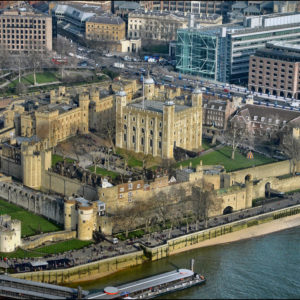
Jasmine Kilburn-Toppin, Cardiff University Kilburn-ToppinJ@cardiff.ac.uk There are few heritage sites as iconic as the Tower of London. For most twenty-first century Londoners and tourists, the Tower is associated with famous prisoners, grisly executions, and the Crown Jewels. To the early modern mind, the Tower had a more varied range of associations. As well as being … Continued

Connecting centre and locality: Political communication in early modern England

Prof. Chris R. Kyle, Syracuse University & Prof. Jason Peacey, UCL (Editors) chkyle@maxwell.syr.edu j.peacey@ucl.ac.uk Historiography on early modern Britain arguably suffers from two related problems: the divergent approaches of social and political historians; and an inadequate conceptualization of the distinction between – and relationship between – ‘centre’ and ‘locality’. In this situation, there is a … Continued

Get your skates on: the Victorian roller revolution

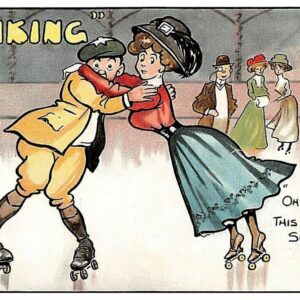
Kate Brooks, Bath Spa University K.Brooks@bathspa.ac.uk Our local parks and beauty spots may be busy during lockdown, but if you are a cool teenager who knows what TikTok is, you will probably be at a nearby  carpark – and on wheels. Since the first lockdown, TikTok and Instagram frequently feature roller skaters, wearing the more … Continued

‘Some choice directions’: Early modern suicide advice literature

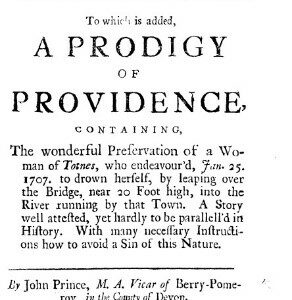
Imogen Knox, University of Warwick @Imogen_Knox Society has long been troubled by the prevalence of suicide, with concerns around mental health rising through the COVID-19 pandemic. Late seventeenth- and early eighteenth-century England similarly believed itself to be facing the ‘prodigious frequency’ of ‘diabolical transports of despair, and self-murther’. The devil reaped ‘a plentiful (but most … Continued

Policing the Home Front, 1914-1918: The control of the British population at war.

Dr Mary Fraser, University of Strathclyde  drmaryfraser@aol.com @drmaryfraser https://writingpolicehistory.blogspot.com/   Writing the everyday lives of ordinary people How do you find out about the lives of ordinary people who lived in the past? What kind of evidence do we have? Diaries give detailed accounts of individuals, but not everybody wrote one, so they can only … Continued